
"illegal coffee tree cutting"
600 article(s) found

A brief introduction to the history and culture of the origin and development of boutique coffee beans in Berman Manor, Kenya.
People in the coffee industry all think that Kenyan coffee is one of its favorite products because Kenyan coffee contains every feeling we want from a good cup of coffee. It has a wonderful and satisfying aroma, well-balanced acidity, well-balanced particles and excellent fruit taste, rich and perfect taste. Coffee entered Kenya in the 19th century, when Ethiopia

The characteristics of Kenyan Coffee Flavor Manor with low acidity introduce the fine coffee beans of Kenya
Kenyan coffee beans the Kenyan government takes the coffee industry very seriously, where it is illegal to cut down or destroy coffee trees. Kenyan coffee buyers are world-class high-quality coffee buyers, and no other country can grow, produce and sell coffee on a continuous basis like Kenya. All coffee beans are first made by the Kenya Coffee Commission (CoffeeBoardofKenya, CB for short)
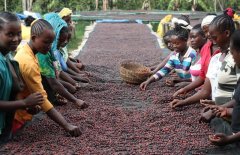
Panama washed Rosa Coffee Bean Flavor the planting advantage of Hartman Manor Coffee Bean in Balu volcanic area
Hartman Manor is located in the Balu volcanic area, the soil is rich in nutrients of volcanic soil, towering original trees become the best shade planting environment, shade planting coffee grows slowly, can brew higher sweetness and brighter acidity. The alpine microclimate of Chiriqui Volcan has also become the perfect base for Hartmann coffee.

Introduction to the Environment of Coffee planting areas in Kenya
Coffee trees in Kenya can bloom twice a year. Most coffee trees bloom in March and April after the long rainy season, and in most coffee producing areas, the harvest season lasts from October to the end of the year. Some coffee trees blossom in October or November and are harvested in July of the following year. Kenyan coffee has always been picked by hand, and farmers only harvest red mature coffee beans.

What is matari coffee? Front Street Yemen Mocha Matari Coffee Introduction
Professional coffee knowledge exchange More coffee bean information Please pay attention to coffee workshop (Weixin Official Accounts cafe_style) Yemen is a classic of sun-dried ancient taste, and it is also the only country producing full-sun coffee in the world. The traditional treatment method of dripping water is illegal. It has not changed since the 17th century when Europe was fascinated with game mocha. This is related to the extremely dry climate in Shumen. Coffee is mainly cultivated in the central highlands.

The planting method of Kenyan Coffee Tree what's so special about Kenyan coffee
Kenyan coffee is mostly grown at an altitude of 1500 to 2100 meters and is harvested twice a year. To ensure that only ripe berries are picked, people must tour the forest about seven times. Kenyan coffee is grown by small farmers. After they harvest the coffee, they first send the fresh coffee beans to the cooperative cleaning station, where the washed and dried coffee is covered with parchment beans.

A brief introduction to the treatment method of grinding degree and baking degree of Kenya Jinchu boutique coffee with rich and perfect taste
Of course, the difference brought about by temperature is only the difference in the area covered by flavor, and what really brings about the difference in three-dimensional shape is that the utensils really see the power, softness, thickness and thickness of kono. All the fruity flowers are sweet, bitter and sweet, as if they were blended into a huge ball with a closed mouth, and the mouth became a Xiao Yu with unlimited flavor.

What is the flavor of washed bean Ganga in Kanatak / Gunge Geely Farm?
Professional coffee knowledge exchange more coffee bean information please follow the coffee workshop (Wechat official account cafe_style) India Karnataka Gongge Geely Farm Gigemogrul washed bean Ganga flavor? Coffee is grown in the town of Chikmagalur Town at the southern tip of Karnataka State in southern India. Gangger Geely Farm (
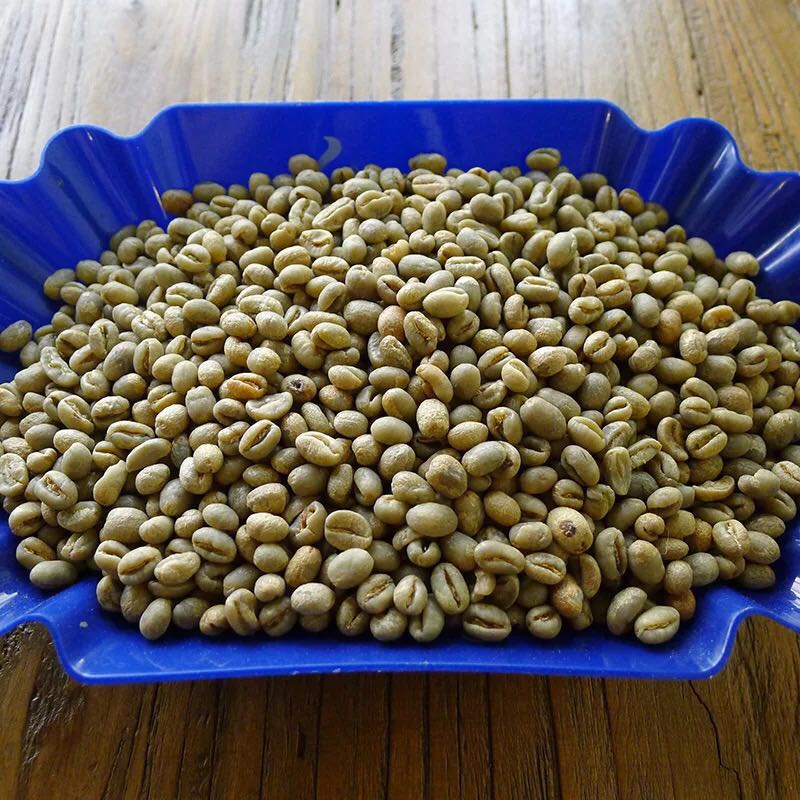
Kenyan coffee taste Kenyan coffee bean price Kenyan coffee taste coffee bean origin
The Kenyan government takes the coffee industry very seriously, where it is illegal to cut down or destroy coffee trees. Kenyan coffee buyers are world-class high-quality coffee buyers, and no other country can grow, produce and sell coffee on a continuous basis like Kenya. All the coffee beans were first acquired by the Kenya Coffee Commission (CoffeeBoardofKenya, CBK).

Flavor and taste characteristics of Kenyan coffee beans
Most of Kenya's coffee trees grow in the mountains to the north and west of the capital Nairobi. There are two main producing areas. One extends southward from the southern slope of Kilinaga, Kenya's highest peak, to near the capital Nairobi. This area is close to the equator and is the largest coffee-producing area in Kenya. In addition, there is a relatively small producing area located on the eastern slope of the Elgon Mountains.

Introduction to the characteristics of Kenyan Jinchu Coffee with Fruit Flavor
The coast of China Coffee Network is plain, and most of the rest are plateaus with an average elevation of 1500 meters. The East African Rift Valley, Mount Kenya, the highest peak in Kenya, the eastern branch of Mount Kenya cuts across the north and south of the plateau, dividing the highland into east and west. The bottom of the Great Rift Valley is 450 mi 1000 meters below the plateau, 50 mi 100 km wide, with lakes of different depths and many standing.

Kenya coffee beans characteristics, production areas, introduction
Coffee arrived in Kenya in the 19th century, when Ethiopian coffee drinks were imported to Kenya via South Yemen. But it wasn't until the early 20th century that bourbon coffee trees were introduced by St. Austin's Mission (St. Austin Mission) was introduced. Kenyan coffee is mostly grown at altitudes of 1,500 to 2,100 meters and harvested twice a year. To ensure that only ripe berries are picked, people must be present

Introduction of very fragrant Kenyan coffee beans with the fragrance of wine
Accounting for 55% of Kenya's total coffee production (40% of the number of estates) is run by numerous small operators. Seeing that coffee is absolutely profitable, these small operators continue to increase the need for agronomy and the development of high-quality coffee tree species, thus greatly promoting the development of coffee in Kenya. To ensure that only ripe coffee fruits are picked, people must be in the forest

Introduction of coffee flavor and taste varieties of Burman Manor in Kenya
The coastal areas are plains, and most of the rest are plateaus with an average elevation of 1500 meters. The East African Rift Valley, Mount Kenya, the highest peak in Kenya, the eastern branch of Mount Kenya cuts across the north and south of the plateau, dividing the highland into east and west. The bottom of the Great Rift Valley is 450 miles below the plateau and 100 kilometers wide, with lakes of varying depths and many volcanoes standing. The northern part is

Flavor Palate characteristics: rich aroma, balanced acidity Kenya: AA coffee Introduction
Kenya's coffee trees mostly grow in the mountains north and west of Nairobi, the capital. There are two main producing areas. One extends southward from the southern slope of Kenya's highest peak, Kilinaga Peak, to the vicinity of Nairobi, the capital. This area is close to the equator and is Kenya's largest coffee producing area. In addition, there is a relatively small producing area located on the eastern slope of the Elgon Mountains.

Coconut live broadcast style caused controversy City Supervision Bureau response!
Professional coffee knowledge exchange more coffee bean information please follow the coffee workshop (Wechat official account cafe_style) more boutique coffee beans please add private Wechat Qianjie coffee, WeChat: qjcoffeex recently, the marketing industry's "old driver" Hainan Coconut Group (hereinafter referred to as "Coconut Group")

Kenya Coffee Bean Flavor and Taste Manor area introduces Kenyan boutique coffee beans
Accounting for 55% of Kenya's total coffee production (40% of the number of estates) is run by numerous small operators. Seeing that coffee is absolutely profitable, these small operators continue to increase the need for agronomy and the development of high-quality coffee tree species, thus greatly promoting the development of coffee in Kenya. To ensure that only ripe coffee fruits are picked, people must be in the forest

Moderate alcohol Berman Manor in Kenya, the cultivation of boutique coffee beans, geographical location, climate, altitude is simple.
Kenyan coffee is mostly grown at an altitude of 1500m, 2100m, and is harvested twice a year. To ensure that only ripe berries are picked, people must tour the forest about seven times. Kenyan coffee is grown by small farmers. After they harvest the coffee, they first send the fresh coffee beans to the cooperative cleaning station, where the washed and dried coffee is covered with parchment beans.

Kenyan coffee AA grade
Kenyan AA coffee is one of the rare good coffees. It is famous for its rich aroma and balanced acidity and is loved by many foodies. It is perfect and balanced, and has a wonderful and strong flavor, both fresh and not overbearing, is a complete but not heavy taste experience.
The top five coffee producers in Africa
Next, I would like to introduce to you five important coffee bean producing areas in Africa. Ethiopia is called the hometown of coffee, and it is said that the earliest coffee beans were found in Ethiopia. Ethiopians have a deep-rooted love of coffee and have developed unique and ornamental coffee rituals. The capital Addis Ababa is full of coffee, large and small.